Acquire and Store in RAG: Governing Your Vector Stores and Knowledge Bases

The content discusses the importance of knowledge governance in designing a RAG (Retrieval-Augmented Generation) assistant, focusing on two main aspects: acquisition of content and its storage. It emphasises selecting appropriate sources, cleaning and tagging content, and ensuring effective document management over time, including version control and retention policies.

Designing RAG Assistants: What Knowledge They May (and May Not) Use

A Retrieval-Augmented Generation (RAG) assistant enhances assistance by combining a language model with a document retrieval layer. Effective design focuses on defining its mission, selecting appropriate knowledge domains, classifying content, and addressing uncertainty. A clear design sheet guides the process, ensuring responsible knowledge management and user support in various contexts.

Governing Agent Memory: State, Segmentation, and Reset

Adding memory to AI agents enhances their helpfulness but introduces governance challenges regarding what data is stored, its duration, visibility, and potential leaks. Effective memory management involves segmenting data by scope and sensitivity, establishing storage rules, enabling user control, limiting access, and ensuring proper reset mechanisms to mitigate risks of data misuse.

Designing Multi‑Agent AI Systems With Guardrails, Not Guesswork

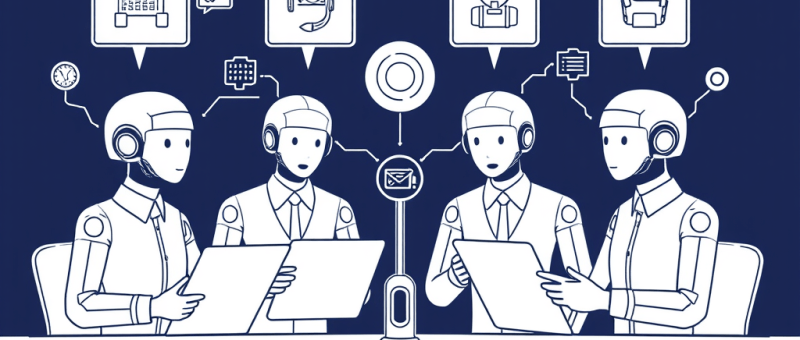
Multi-agent systems impress with their ability to act autonomously but can pose risks without clear role definitions. A design charter outlines each agent's tasks, limitations, and escalation rules. By embedding constraints and ensuring oversight, designers can create effective systems that enhance IT support while preventing potentially harmful actions.

What Changes When AI Starts Acting: Agents Through DASUD

Organisations initially adopted AI for analytics and traditional machine learning, evolving to generative AI, and now to AI agents with autonomous capabilities. Governance must adapt to these systems, focusing on their design, acquisition, storage, use, and deletion. Effective stewardship and oversight of these semi-autonomous agents is crucial for operational success.